Order one of our free resource packs today! Fill out the form here.

Summary of Hepatitis C Elimination Efforts in Drug Treatment Services Across England
England has made significant progress towards eliminating hepatitis C (HCV) as a public health threat, with drug treatment services playing a central role in identifying, testing, treating, and preventing infection among people who use drugs – the population most affected by hepatitis C (Hepatitis C in England 2025 – GOV.UK).
A key element of the national strategy has been the establishment of 22 Hepatitis C Operational Delivery Networks (ODNs) across England. These networks coordinate testing, treatment, and care pathways, working in partnership with local authorities, drug and alcohol treatment services, prisons, primary care, homelessness services, and community organisations. Their aim is to ensure that people can access hepatitis C testing and curative treatment in the settings they already use, rather than relying solely on hospital-based services (Hepatitis C Care Clinical Network Specification).
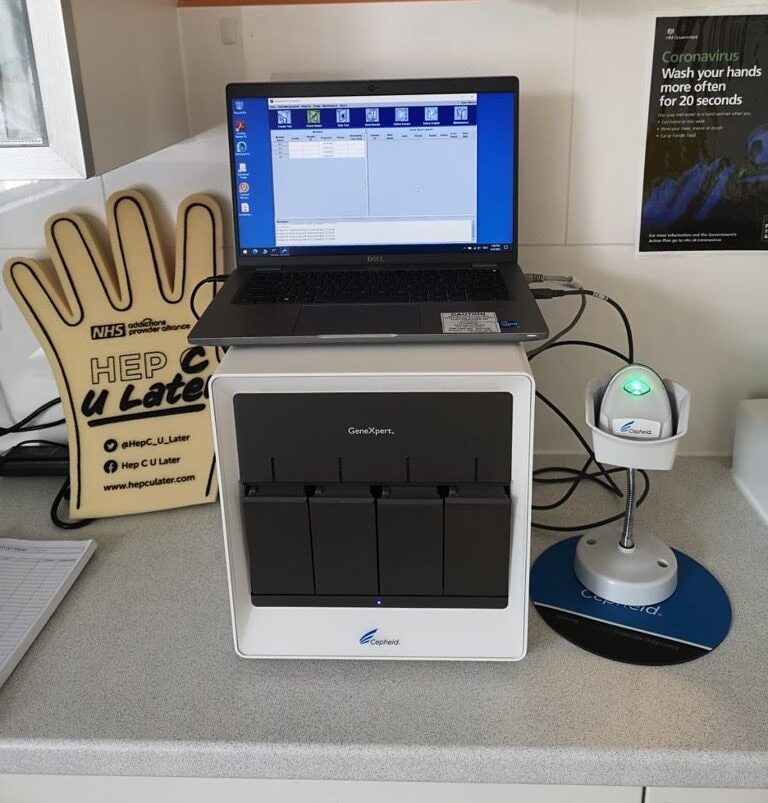
Drug treatment services have become a major focus for case-finding because people who inject drugs remain at the highest risk of acquiring and transmitting hepatitis C. Through innovation at pace, and collaboration between ODNs, treatment providers, and peer support organisations such as The Hepatitis C Trust, routine hepatitis C testing is increasingly offered within drug and alcohol services, often using dried blood spot testing and Cepheid GeneXpert testing to improve accessibility (Hep-C-U-Later-National-Cepheid-GeneXpert-Report-final.pdf). Additionally, a nationally agreed criteria for hepatitis C micro-elimination has been reached by many NHS and third sector organisations to demonstrated progress with testing, treatment and review of risk. Many have now sustained this for years.
Across the system the NHS (Hep C U Later) and third sector drug treatment organisations, the Hepatitis C Trust, NHSE, primary care and UKHSA all communicate and share information within information governance parameters to ensure no one is lost to follow up, data is accurate, and efforts can be coordinated to ensure every person who needs treatment receives it.
The availability of highly effective direct-acting antiviral (DAA) treatments, which can cure more than 95% of infections in as little as 8–12 weeks, has transformed elimination efforts. Increasingly, treatment is delivered within community and drug treatment settings rather than specialist hospital clinics, reducing barriers to care and improving treatment uptake among vulnerable populations (CNTW-Medicine-V3.pdf).
National surveillance data demonstrate the impact of these efforts. Chronic hepatitis C prevalence has continued to decline in England, including among people who inject drugs, largely due to expanded testing and widespread access to curative treatment. England has already met the World Health Organisation target for treatment initiation and is moving closer to its elimination goals, although challenges remain in diagnosing those who are still unaware of their infection and preventing reinfection after treatment.

Alongside testing and treatment, drug treatment services support elimination through harm reduction interventions, including needle and syringe programmes, opioid substitution treatment, education, and peer-led engagement (CPD Accredited Training Modules – HEP C U Later). These services help reduce transmission, support treatment adherence, and encourage re-testing for those at ongoing risk.
In summary, England’s hepatitis C elimination programme has integrated testing and treatment into drug treatment services through a network of ODNs, community partnerships, peer support, and simplified treatment pathways, as well as through activating the drug treatment services to innovate and share best practice. These efforts have led to substantial reductions in hepatitis C prevalence and have positioned England as one of the countries closest to achieving hepatitis C elimination among people who use drugs. As a result of these efforts, NHS community drug and alcohol treatment services are now shifting their focus to improvements which can be made around liver health, harm reduction, and hepatitis B testing and vaccinations.
Further resources:
- List of Operational Delivery Networks in England: hep-c-odns-240921.pdf
- The 25/26 Hep C U Later impact report showing work across NHS drug and alcohol treatment services: FINAL-Hep-C-U-Later-Impact-Report-2026-1.pdf
- Harm reduction case study – GMMH and cocaine harm reduction: Greater-Manchester-Mental-Health-NHS-Foundation-Trusts-Approach-to-Reducing-Cocaine-Related-Harm-A-Best-Practice-Case-Study-v3.pdf
- Harm reduction case study – Improving NSP in Community Pharmacies Case Study: Improving-Pharmacy-Needle-and-Syringe-Provision-Case-Study.pdf
- Hepatitis B – Barriers and Solutions within Drug Treatment Services: Barriers-Case-Study-final.pdf
- Hep C U Later Hepatitis C Micro-elimination Sustainability Toolkit: HCUL-ST-v3.pdf