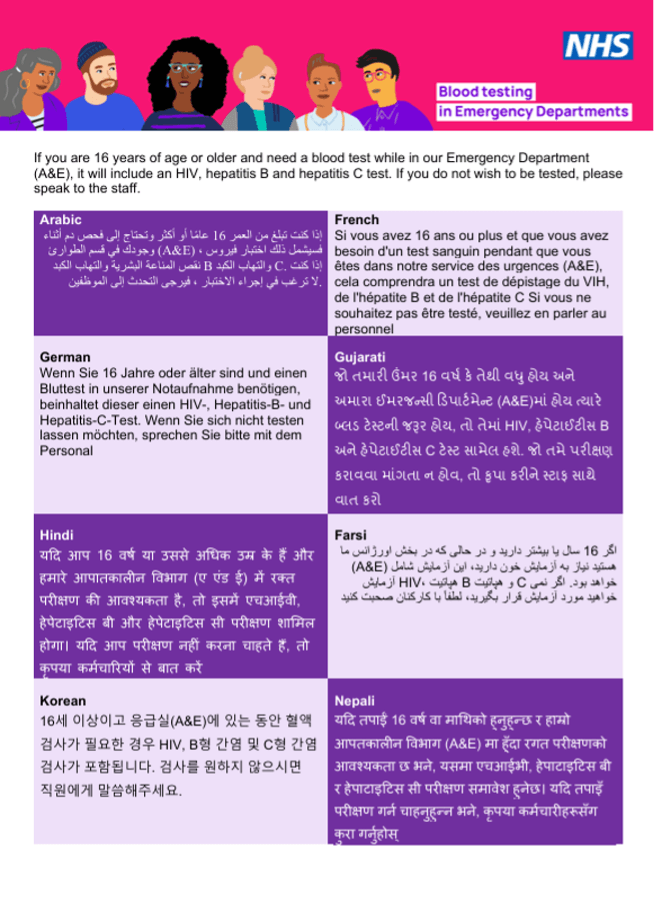
Order one of our free resource packs today! Fill out the form here.

Summary of Emergency Department (ED) Opt-Out Testing in England
The NHS Emergency Department (ED) Blood-Borne Virus (BBV) Opt-Out Testing Programme was launched in England in April 2022 as part of efforts to eliminate HIV and viral hepatitis as public health threats. The programme routinely tests adults attending participating emergency departments who require a blood test for HIV, hepatitis B (HBV), and hepatitis C (HCV) unless they specifically choose not to be tested, essentially opting out.
Initially introduced in 34 emergency departments located in areas with high HIV prevalence, the programme has since expanded significantly. By 2025, routine testing was being delivered in 89 major emergency departments across England (NHS England » NHS expands HIV opt-out testing to 30 more A&Es).
The programme aims to:
- Identify people living with undiagnosed HIV, hepatitis B, or hepatitis C.
- Re-engage individuals who have previously been diagnosed but are no longer in care.
- Link patients rapidly into specialist treatment and support services.
- Reduce late diagnoses, illness, deaths, and onward transmission of infection.
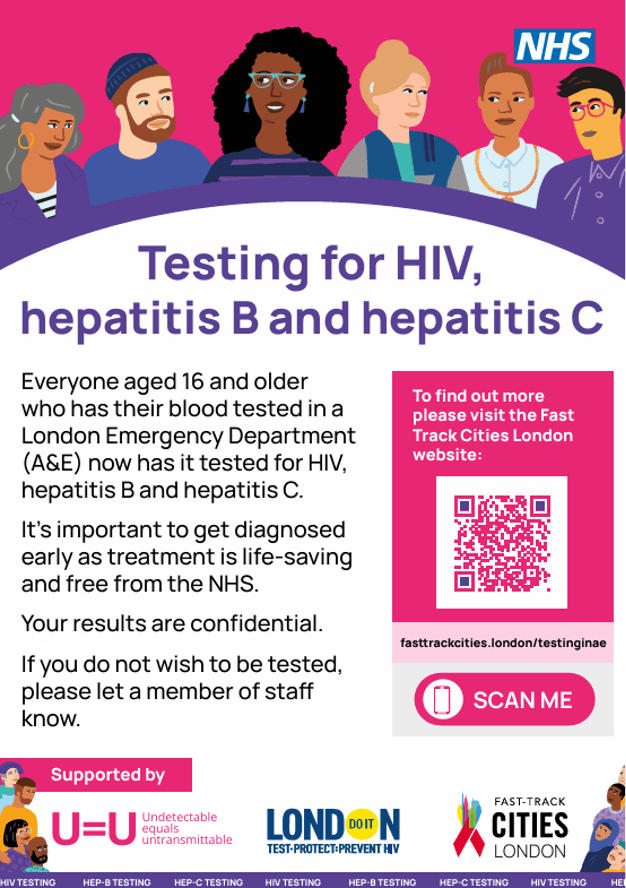
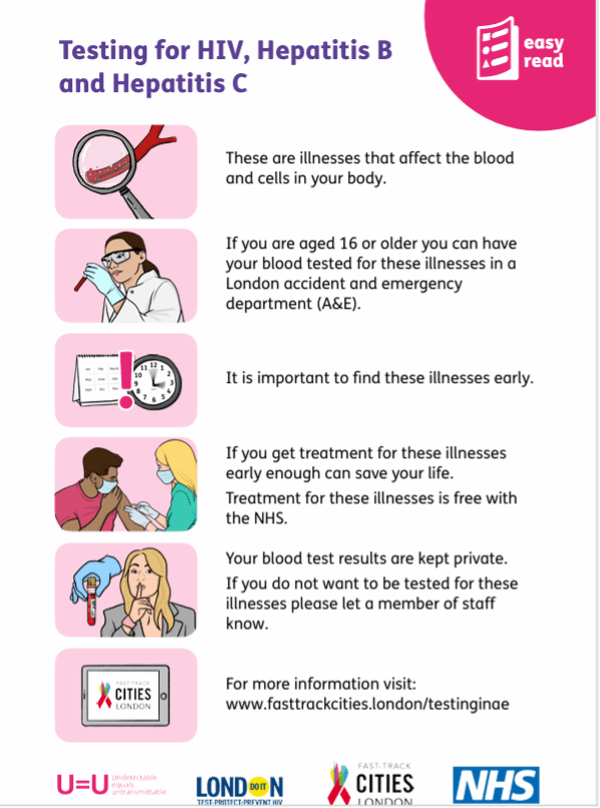
Results have been substantial. Between April 2022 and early 2025, more than seven million BBV tests were undertaken through the programme, identifying over 7,300 blood-borne virus diagnoses, including more than 1,000 new HIV diagnoses, 4,600 hepatitis B diagnoses, and 1,600 hepatitis C diagnoses.
More recent NHS data published in June 2026 reported that the programme had identified approximately 1,900 previously undiagnosed HIV cases since its launch. Importantly, 93% of those newly diagnosed had no previous recorded HIV test, demonstrating the programme’s success in reaching people who may not access traditional testing services (NHS England » NHS A&E blood-testing finds 2,000 unidentified HIV cases in first 4 years).
Independent evaluations by the UK Health Security Agency (UKHSA) and the University of Bristol found the programme to be highly effective and cost-effective. Testing uptake has been high, with the programme making a significant contribution to England’s HIV and hepatitis elimination goals, while preventing future infections and improving health outcomes through earlier diagnosis and treatment (Cost-effectiveness of emergency department opt-out testing for HIV in England: a modelling study – The Lancet HIV). The HIV action plan also concludes it will continue to support ED opt-out testing: HIV Action Plan for England, 2025 to 2030 – GOV.UK
In summary, ED opt-out testing in England is a major public health initiative that uses routine blood testing in emergency departments to identify undiagnosed HIV, hepatitis B, and hepatitis C infections. The programme has successfully increased testing, diagnosed thousands of people who might otherwise have remained unaware of their infection, and supported England’s goal of eliminating new HIV and viral hepatitis transmissions.
Further resources:
- 2024 ED opt out testing good practice guidance: NHS England » Blood-borne viruses opt-out testing in emergency departments in areas of high and extremely high HIV prevalence: good practice guidance
- 12 month evaluation of ED opt-out testing: Public health evaluation of BBV opt-out testing in EDs in England, 12-month report 2023 – GOV.UK
- 33 month evaluation of ED opt-out testing: Public health evaluation of BBV opt-out testing in EDs in England, 33-month final report 2025 – GOV.UK
- Staff perspectives on implementing opt-out blood-borne virus testing in English emergency departments: a qualitative study: Staff perspectives on implementing opt-out blood-borne virus testing in English emergency departments: a qualitative study | Emergency Medicine Journal